Living a block from the water? Five checks that keep salt out of a pedal-assist bike
Covers pedal-assist bicycles built for flat, short-distance riding, and what owning one near salt water involves
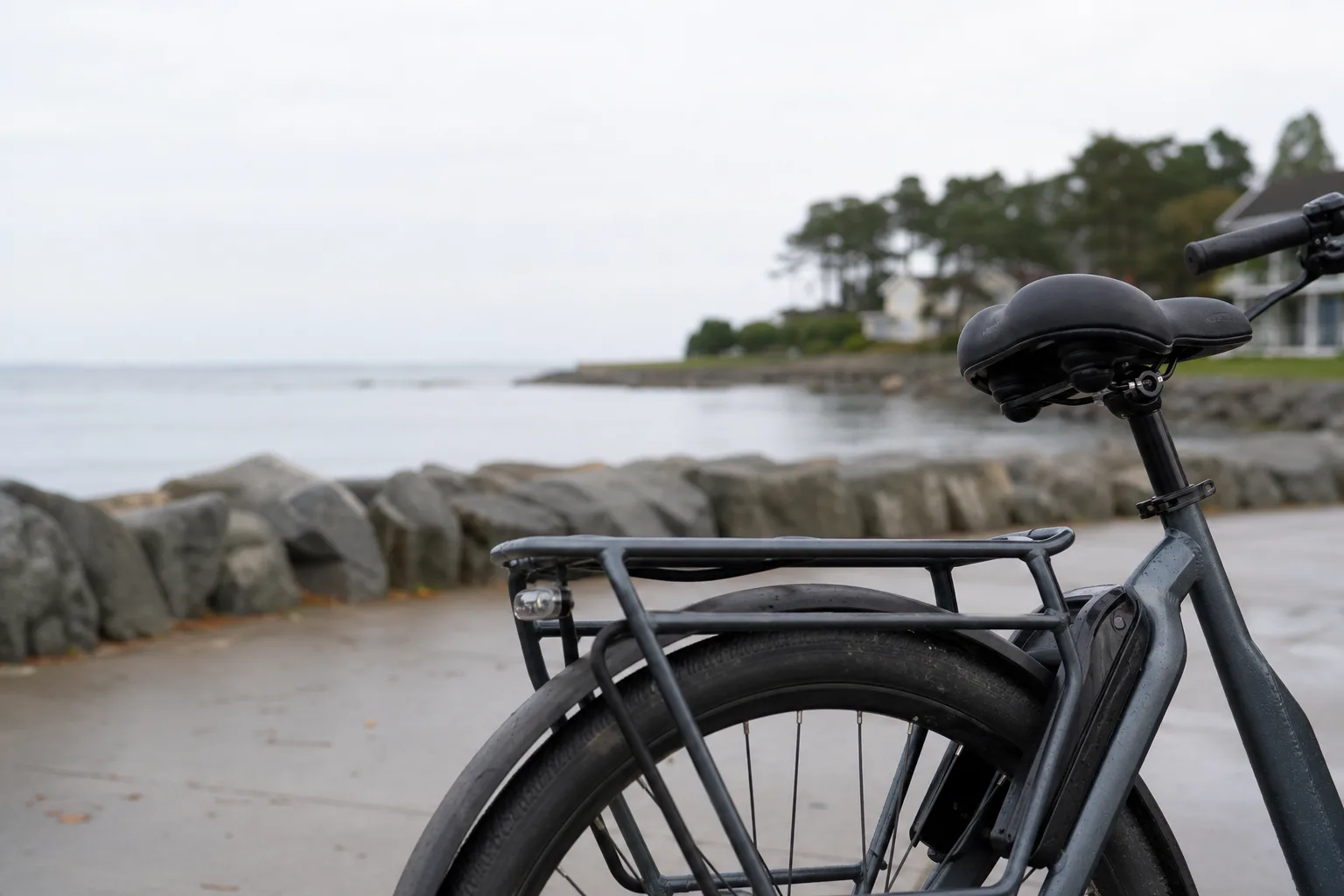
Plated rack hardware
Small zinc-plated bolts on fenders and racks corrode before anything else because they are rarely removed and sit in a mix of steel and aluminum. Replacing them with stainless during the first year avoids drilling out a seized head later.
Salt does not need surf or spray to reach a bike. A block inland, with the garage door open on an onshore breeze, is enough to leave a fine film on every metal surface within a day or two, and that film pulls moisture out of the air long after the ride is over. The damage shows up in a predictable order, always at the same handful of places, and it is slow enough that a rider who checks monthly will catch it and one who checks annually will not. Here is what a careful reader looks at.
1. The fasteners that go first, and where they are
Corrosion starts where two different metals meet under a little moisture, which on most assisted bikes means a steel bolt threaded into an aluminum frame or rack boss. Rack and fender hardware fails first because it is small, often plated rather than stainless, and rarely disturbed. Next come the bottle cage bolts, the disc rotor bolts, and the pinch bolt on the seat collar. A rider who backs each of these out twice a year, wipes the threads, and reinstalls them with marine anti-seize will keep them removable, which matters far more than keeping them shiny.
2. Connectors, which fail quietly and cost the most
The electrical side of a coastal bike gives no warning. Salt creeps into the display cable, the throttle plug, the brake cutoff sensor, and the main battery contacts at the mount, and the first symptom is usually intermittent: a display that blanks over a bump, assist that drops out and returns. Pull each connector once a season, look for green or white powder on the pins, clean it with contact cleaner rather than water, and put a thin film of dielectric grease on the seal before it goes back together. The battery mount contacts deserve the same attention, gently, since they carry real current.
3. Rinsing without pushing salt somewhere worse
A garden hose on low, held below the level of the bearings and aimed down, does the job. Pressure washers do not. What matters is the order: rinse the frame, fenders and rack first, then the chain and cassette, then dry with a towel and let the bike stand upright so water leaves the seat tube and the fork legs. A dry chain is the point of the exercise, so relube after every rinse, and check the derailleur pivots and the brake caliper pistons, which stiffen from salt long before they look bad.
4. A garage that hits a hundred degrees
Heat and charging do not mix. Lithium cells age fastest when they are held at a high state of charge and a high temperature at the same time, which is exactly what an afternoon top-up in a closed garage does. The practical fix is to charge indoors, on a hard surface, in the coolest part of the day, and to bring the pack inside rather than leaving it clipped to the bike in the heat. The Department of Energy tracks battery performance and safety research, and the consistent theme is that temperature control does more for pack life than any charging habit.
5. Winter storage, and the number that matters
A pack left full all winter loses usable capacity permanently, and a pack left empty can drop low enough that the protection circuit refuses to wake it. The middle is where cells are happiest: roughly half charge, in a cool dry interior space, checked every couple of months and topped back to that level if it has drifted down. Log the date each time. A note on the pack with the month it was last checked turns a vague intention into something you can actually verify in February, which is when most storage mistakes reveal themselves.
What the record gives you
Keeping the dates is the whole trick. Write down when the rack bolts came out, when the connectors were greased, when the pack read half and what the charger said, and after two seasons the pattern is obvious: certain bolts need replacing on a schedule, certain plugs stay clean forever, and the battery behaves predictably enough to plan around. That record is also what a shop wants when something does go wrong, and it is what turns a replacement decision from a guess into arithmetic.
None of this takes long. An hour in spring, an hour in fall, ten minutes after a beach ride, and a bike that lives near salt water stays a bike rather than a project.
| Intermittent assist as a symptom | Assist that cuts out over bumps and returns is usually a corroded connector pin, not a failing motor or controller. Checking plugs before ordering parts saves the most common misdiagnosis on coastal bikes. |
| Dielectric grease, thin film | A light coat inside connector seals blocks moisture without interfering with the contacts. Too much grease traps grit, so wipe the excess before pushing the halves together. |
| Hose pressure and angle | Low pressure aimed downward keeps salt out of hub and bottom bracket bearings. Pressure washers drive water past seals that were never designed to resist it. |