Shopping for an e-bike? Price the replacement battery before you price the bike
Covers pedal-assist bicycles built for flat, short-distance riding, and what owning one near salt water involves
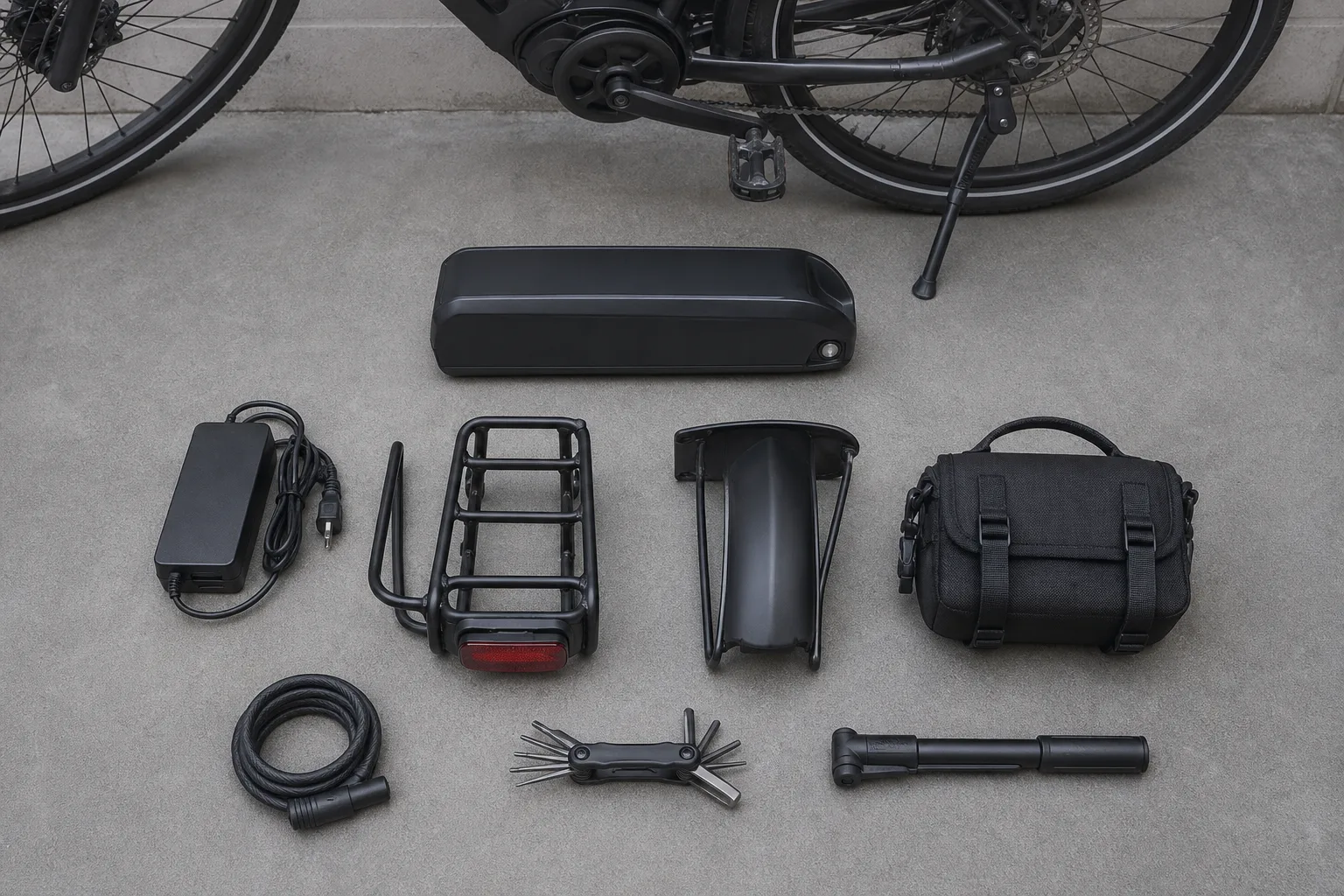
Four separate purchases
An assisted bike is a frame group, a motor, a battery and a set of wear parts, each with its own lifespan. Pricing them separately is the only way to know what you are actually committing to.
A pedal-assist bicycle is sold as one object at one price, but it is really four purchases stapled together, and they age at wildly different rates. The frame, fork and wheels will outlast the reason you bought the bike. The motor, if it is a decent sealed unit doing flat neighborhood errands, is close to a non-event. The battery is a consumable with a long fuse. Everything else, pads, tires, chain, cables, grips, is ordinary bicycle spending that arrives on an ordinary bicycle schedule. Pricing the bike honestly means pricing all four separately before the receipt is signed.
Splitting the sticker price into its four parts
On most assisted bikes built for short flat trips, the frame group and the finishing kit account for a large share of what you pay, and that share is the part you can inspect in the shop. The motor is a smaller line than people expect, because hub motors for low-torque flat riding are commodity items. The battery is the line that surprises people: on many bikes it is the single most expensive component, more than the motor and the drivetrain together. The rest, tires, pads, chain, is small at purchase and steady forever after.
The useful move is to find the manufacturer's spare parts page before you buy, not after, and write down what they charge for a replacement pack today. That figure, set against the price of the whole bike, tells you what fraction of your money is sitting in cells that will slowly lose capacity whatever you do. If a brand sells the bike freely but has no listing for the pack, no part number, and no dealer who can quote one, that absence is itself the answer to the question you were asking.
What a careful reader checks before paying
Check that the battery has a part number printed on the case, not just a model name on the marketing page, because part numbers survive rebrands and marketing names do not. Check whether the pack is a common rail-mount format shared across several models in the range, or a bespoke shape molded into one frame's downtube. Check the warranty terms on the pack specifically, which are almost always shorter than the frame warranty and often stated in charge cycles rather than years. Check who is authorized to service it, and how far away they are.
Ask the shop one blunt question: if this pack fails outside warranty, what do you order, from whom, and how long does it take. A dealer who answers immediately has done it before. The Consumer Product Safety Commission oversees the safety of consumer products including the lithium-ion packs and chargers sold with these bikes, which is the practical reason to buy a pack from the manufacturer or an authorized dealer rather than a marketplace listing of uncertain origin, however tempting the price looks in year four.
What year four actually costs
Year four is when the bills cluster. The pack that used to comfortably cover a round trip now wants a charge before the return leg, which is not failure but capacity fade, and the fix is a new pack at whatever the spares page says that month. Brake pads on a bike carrying a motor, a battery and a load of groceries wear faster than they do on an unassisted bike, so budget for pads more than once across four years, and for at least one set of tires, probably two if the riding is daily and the pavement is rough.
Add the small things that are easy to forget: a chain, brake and shifter cables, a rear light battery or a wiring repair where the harness enters the frame, grips, and a tune-up or two. None of these is large alone. Together, spread over four years, they are a real number, and the honest way to think about the bike is total spend over the whole period divided by trips taken, rather than the price on the tag divided by nothing.
What a discontinued pack does to resale
A bike whose battery is still cataloged and shipping sells as a bike. A bike whose battery was discontinued two model years ago sells as a project, because the buyer is inheriting an unsolvable problem with a deadline attached. This is the strongest argument for buying into a range that has kept the same pack format across generations, from a company with a parts counter, because that continuity is what protects the value of everything else you bought: the frame, the wheels, the motor, all of which are fine.
Price the pack, note the date you checked, and keep the note with the receipt. Four years later it will be the most useful piece of paper you own about that bike.
| Check the spares page first | Look up the replacement pack price on the manufacturer's parts listing before you buy the bike, not after the pack fades. A brand with no listing and no part number has told you something important. |
| Part number over model name | Battery part numbers printed on the case survive rebranding and model-year changes, while marketing names do not. Write the number down and keep it with the purchase receipt. |
| Shared pack formats | A rail-mount pack used across several models in a range is far easier to replace years later than a bespoke shape molded into one frame. Continuity across generations is worth paying for. |